Hey Luck Hackers,
The origins of this issue of Luck Hacker come from a comment on a post I made about the difference between the process for strategy and the content of strategy.
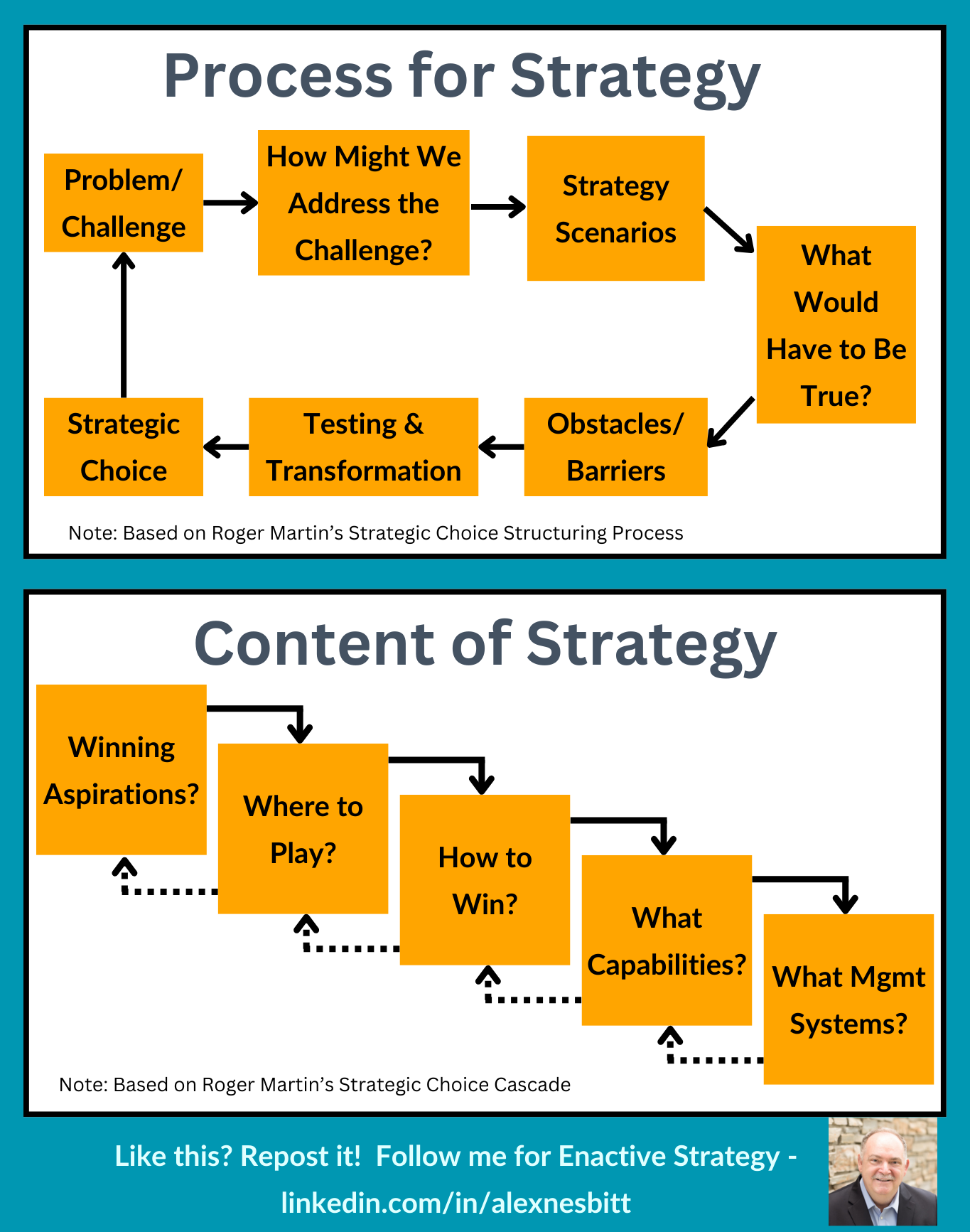
The comment suggested providing more specific contextual advice and examples, such as writing about corporate strategy, business strategy, product strategy, etc.
And while I agreed with the suggestion, I had to reflect on why that does not come more naturally to me.
Perhaps it’s the curse of knowledge, but it doesn’t make that much difference if I’m talking about strategy for a corporation, business, sports team, family, or simply losing weight – I see strategy as an inherently simple and universal tool.
Strategy is about something straightforward: Making a set of choices that will improve your odds of success. (AKA hacking your luck)
Whether you're planning the future of your company, managing your finances, or improving your health, strategy boils down to this universal principle: we live in a probabilistic universe where certainty is rare, but we can shift the odds in our favor through deliberate choices.
However, while strategy is universal, its context is not. The process of developing strategy—clarifying challenges and identifying relevant choices—remains the same, but the nature of those challenges and choices differs depending on the domain.
The Process: Challenges and Choices
At the heart of strategy lies two critical components:
- Clarifying the Challenge: What specific obstacle is preventing progress in your context?
- Framing the Choices: What set of differentiated choices will best address that challenge and improve your odds of success?
Let’s take two examples to illustrate this:
Example 1: Business Strategy
- Challenge: How can we grow revenue by expanding into a new market?
- Choices:
- Enter Market A, which has high potential but steep competition.
- Enter Market B, which has moderate potential but fewer competitors.
- Focus on optimizing current market share instead of expanding.
The process involves assessing risks, resources, and potential returns to make the best choice for growth.
Example 2: Weight Loss Strategy
- Challenge: How can I sustainably lose weight without feeling deprived?
- Choices:
- Commit to intermittent fasting.
- Follow a calorie-reduction plan with flexible food options.
- Engage in a high-intensity exercise regimen.
The process is similar: define the challenge and identify choices that align with your goals, resources, and constraints.
The Universal Starting Point for Building Strategy
To systematize this approach, here’s a simple framework you can use across contexts:
- Define the Context: What domain are you operating in (e.g., corporate, personal, product)?
- Identify the Challenge: What is the most significant obstacle, issue or challenge to achieving your goal?
- Frame the Choices: Outline clearly differentiated courses of action that directly address the challenge.
If you can do those three things well, you will always have a good foundation for your strategy development.
Why This Matters
Strategy isn’t just for corporations or product teams—it’s for everyone.
Whether you're leading a company, building a brand, or trying to lose weight, strategy is your tool for navigating complexity and uncertainty. By focusing on challenges and choices, you can approach any domain with clarity and confidence.
Think about your own challenges: What choices can you make today to shift the odds in your favor?
Here’s to hacking your luck through better strategy,
Alex
Alex Nesbitt
Founder, Strategy Academy
P.S. When you're ready, here are 3 ways I can help you:
(1) Contact me for consulting and advisory services
(2) The Enactive Executive Program - (waitlist) is designed to amplify your leadership and impact.
(3) Join my strategic thinking masterclass: Strategic Thinking For Advantage – A training program for aspiring leaders ready to turn strategic thinking into a superpower.

Responses